Peptides
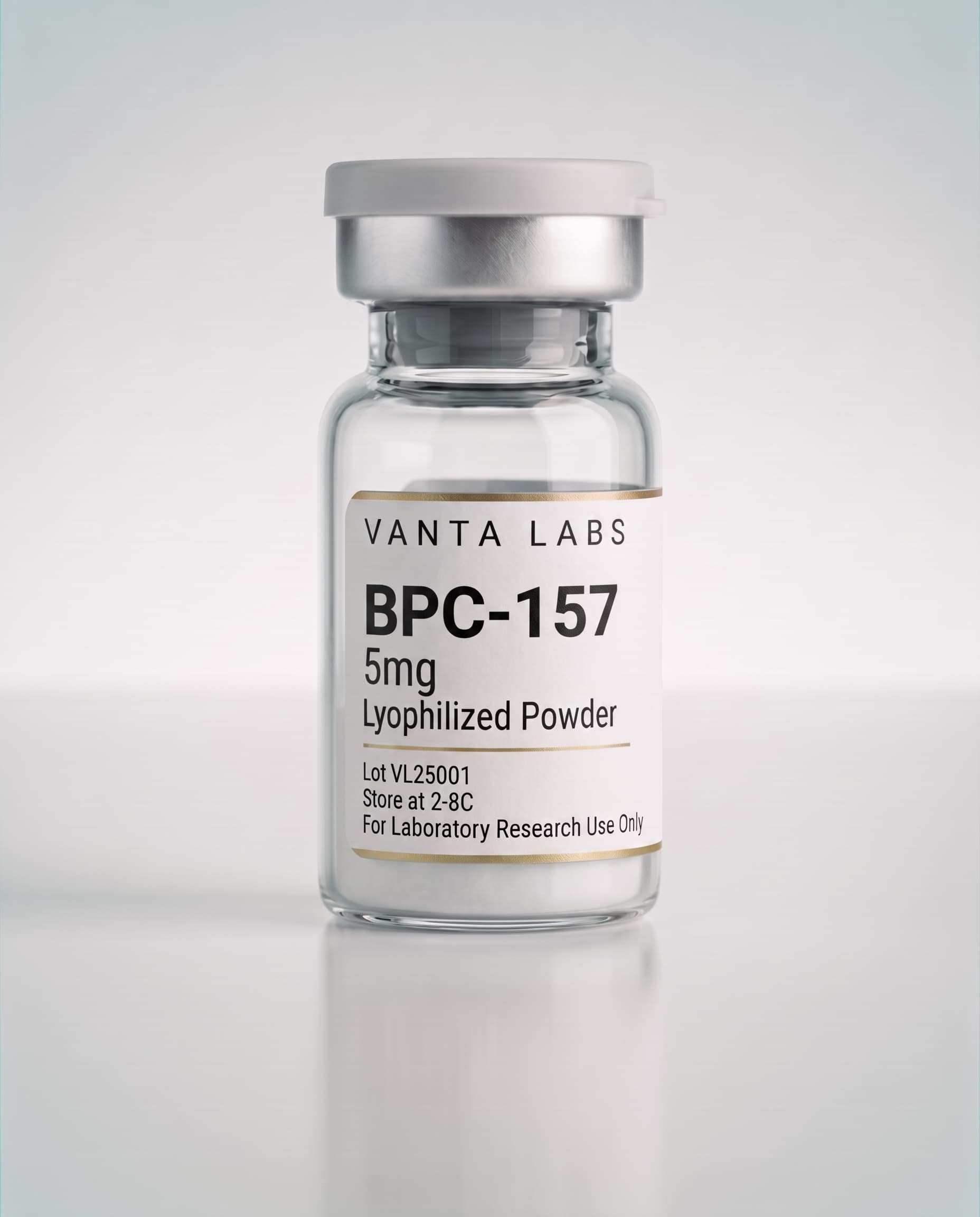
BPC-157
Buy 2, get 1 free5mg · 10mg
$29.99
99.736% purityView COA
Welcome to VANTA LABS
Are you 21 or older?
Vanta Labs supplies research materials for laboratory use only. You must be 21 or older to enter.
Research use only. Not for human or veterinary use.
Thymosin Alpha-1 is searched under several close spelling variants, including thymosin alpha 1, thymosin alpha-1 peptide, and the acronym TA1. Each of these refers to the same chemical identity; Vanta Labs lists the product under its common name alongside its nonproprietary name, Thymalfasin, so researchers using any of these terms reach the correct listing. A CAS number is a unique numeric identifier assigned by the Chemical Abstracts Service to one specific chemical substance, independent of the trade name or brand under which it is sold. It allows a researcher to confirm that two listings from different sources describe the same underlying compound, rather than relying on product naming alone. A molecular formula is a notation that lists the type and count of each atom in a single molecule of a compound. It is a fixed structural property of the compound itself and does not vary by batch, supplier, or packaging format, which is why it functions as a reliable identity check alongside a CAS number. Lyophilization, or freeze-drying, is a standard method of removing water from a peptide solution under vacuum at low temperature. Peptides are commonly supplied in lyophilized form because the dried state is generally more stable for storage and transport than a liquid solution, reducing the material's exposure to degradation pathways that are more active in solution. Supplying a research peptide in a sealed vial is a common packaging format intended to protect the lyophilized material from moisture and contamination prior to use. The vial format itself does not indicate a recommended quantity, concentration, or method of use; it reflects only how the material is packaged for shipment and storage. Amino acid sequences are conventionally written using a one-letter code, where each letter represents one of the twenty standard amino acids joined in a specific order. This notation allows a complex molecular structure to be represented compactly and compared precisely against reference data. N-terminal acetylation refers to the addition of an acetyl group to the first amino acid residue at one end of a peptide chain. This is a covalent structural modification made during synthesis and is distinct from forming a salt, such as an acetate salt, with the finished peptide; the two terms describe different chemistry even though both involve an acetyl-related group. A certificate of analysis is a document issued following laboratory testing of a specific batch of material. It typically records the analytical methods used, the identity confirmation performed, and the purity figure obtained for that batch, and it is the primary reference for verifying what a given batch actually contains. Purity figures reported on a certificate of analysis are specific to the batch and testing run described in that document. Manufacturing and testing variability mean that a figure for one batch is not a guaranteed outcome for a later batch of the same product, which is why batch-specific documentation, rather than a fixed number in page copy, is the appropriate reference. Reverse-phase HPLC is a chromatographic technique commonly used to separate the components of a sample so that a detector can measure the relative proportion of the target compound. It is a widely used method for assessing peptide purity in a laboratory setting. A Research Use Only classification means a material is sold and labeled exclusively for use in controlled laboratory research. It carries no representation of safety or effectiveness for any use in or on a living organism, and it excludes human consumption, human application, and veterinary use of any kind. Batch traceability, meaning the ability to connect a specific unit of product back to its own test record, matters for research reproducibility because it lets a researcher confirm exactly which documented material was used in a given experiment, rather than relying on a general product description.
Molecular Formula: C129H215N33O55
Purity
99.764%
Batch
Vanta184290
Published batch records
Vanta184290
5 mg · 99.764% · Aug 24, 2026 · Kovera Labs
Frequently Asked Questions
Yes. Thymalfasin is the nonproprietary name for the same 28-amino-acid peptide sold here as Thymosin Alpha-1. The two names refer to one chemical identity, not two separate compounds.
No. Thymalfasin is not listed in the FDA's Drugs@FDA database. Vanta Labs supplies it for laboratory research only. It is not for human or veterinary use.
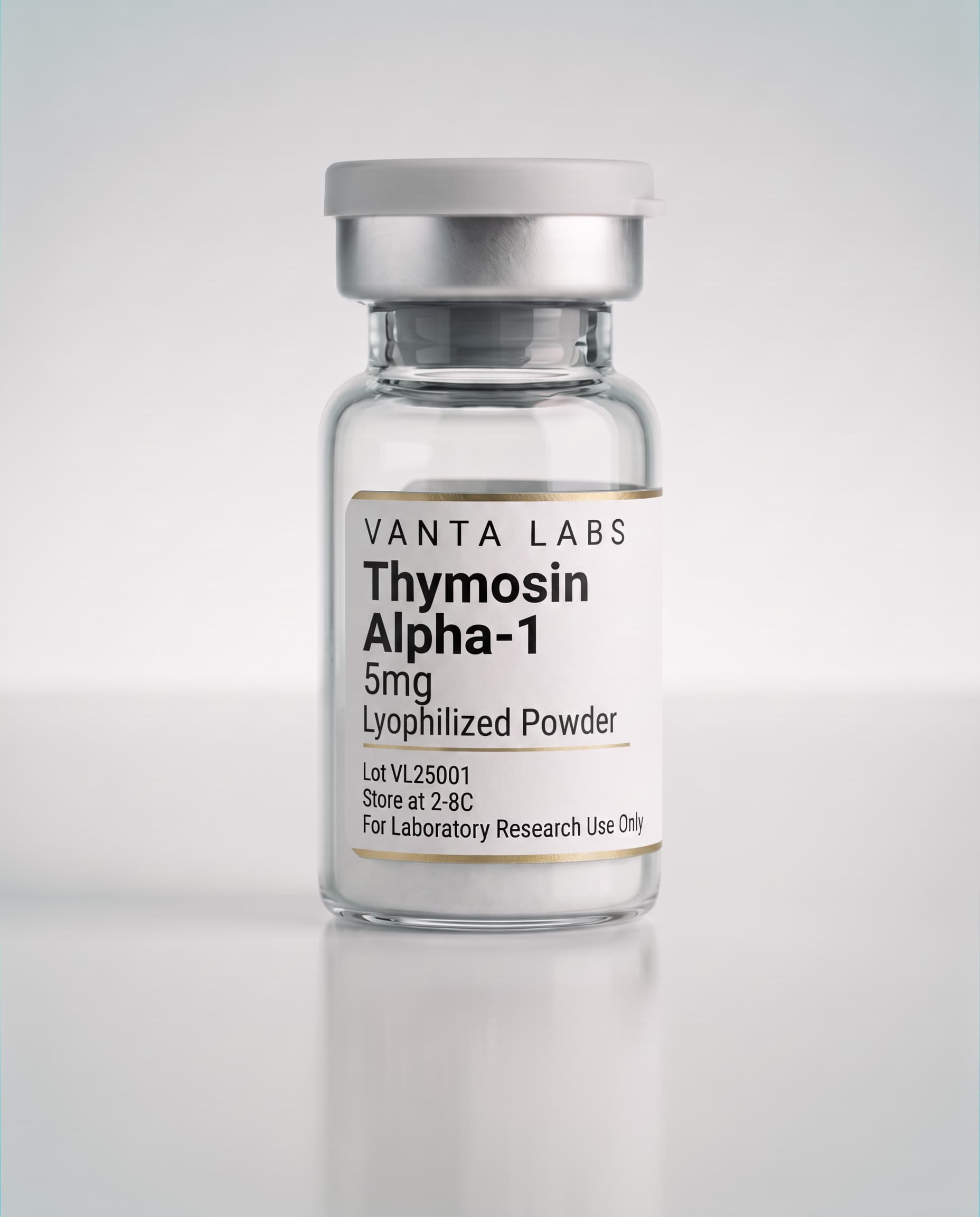
Thymosin Alpha-1 peptide is a synthetic compound composed of 28 amino acid residues, supplied by Vanta Labs as a lyophilized powder for laboratory research use only.
Thymalfasin is the nonproprietary name used for the same material sold under the name Thymosin Alpha-1. It describes a chemical identity, not a different product.
The peptide is described as a 28-residue sequence, consistent with reference material published by regulatory and chemical database sources.
The CAS number listed for this product is 62304-98-7, as shown on the Vanta Labs product page and cross referenced against independent chemical identity sources.
The molecular formula listed for this product is C129H215N33O55.
The molecular weight listed for this product is 3108.3 g/mol.
Thymosin Alpha-1 is supplied as a lyophilized powder in a 5 mg vial.
No. N-terminal acetylation is a structural feature of the peptide itself, while Thymosin Alpha-1 acetate refers to a separate acetate salt form. The chemical identifiers listed on this page describe the free-base peptide, not the acetate salt.
The batch currently associated with this listing has its own certificate of analysis. The report reference on that document can be used to confirm it corresponds to the batch sold under this listing.
No. A purity figure applies only to the batch and testing run it was measured from. Each new production run is documented with its own certificate of analysis and its own figure.
No. Thymosin Alpha-1, as sold by Vanta Labs, is intended strictly for laboratory research use and is not intended for human consumption, human use, or veterinary use.
No. All compounds sold by Vanta Labs are strictly for legitimate laboratory research purposes and are not intended for human or veterinary use.
Where a batch report has been published, the product page links to it. All published reports are in the COA Library, searchable by batch number.
In-stock orders placed before 2PM ET on a business day are dispatched the same day. Carrier transit time is additional. You will receive secure tracking information after dispatch.
No — exactly one discount applies per order. Promo codes, ambassador codes, bundle pricing, and promotions never combine. You don't have to figure out which is best: checkout automatically applies whichever single discount saves you the most.
Where we ship, damaged or missing items, returns and support are covered in our FAQ.
Related Products
Peptides
5mg · 10mg
$29.99
Peptides
10mg
$54.99
Peptides
50mg
$29.99
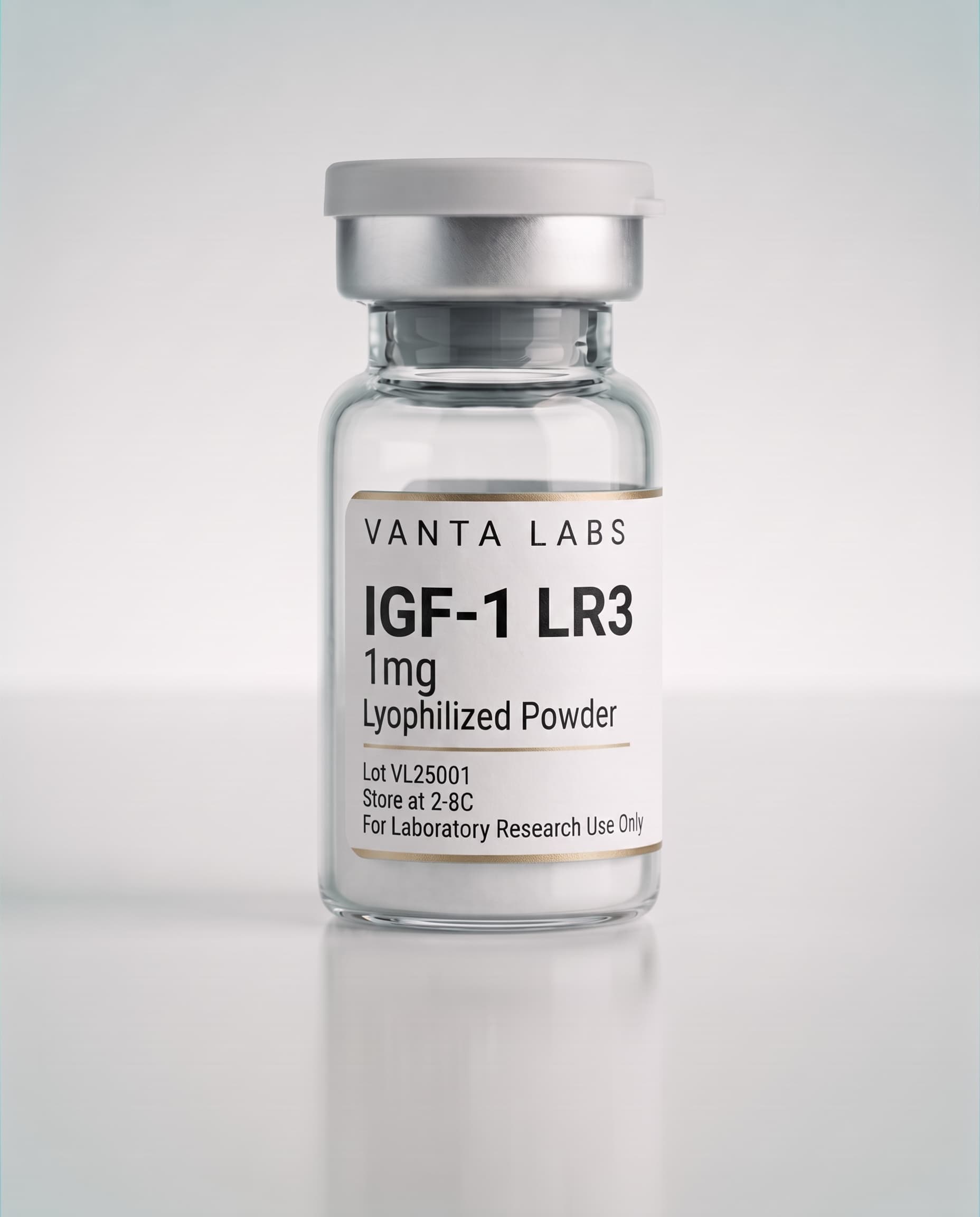
Peptides
1mg
$79.99
Thymosin Alpha-1 is the common name for a synthetic peptide whose nonproprietary designation is Thymalfasin. Both names refer to the same material identity: a 28-residue peptide. Vanta Labs lists the two names together on the product page so that researchers searching for either term reach the correct listing.
The compound description, a synthetic peptide of 28 amino acids, refers to the number of amino acid residues joined in the peptide's primary structure. This is a structural fact about the molecule's composition, not a statement about how the material behaves in any biological system. Researchers using this figure for identity confirmation should cross reference it against the specifications in the next section.
Vanta Labs currently supplies Thymosin Alpha-1 in a 5 mg format. This figure describes the total mass of peptide contained in the vial as supplied, not a recommended quantity for any particular use. The product is intended as a bulk research material, and any application of the material falls outside the scope of this listing.
| Specification | Value |
|---|---|
| CAS number | 62304-98-7 |
| Molecular formula | C129H215N33O55 |
| Molecular weight | 3108.3 g/mol |
| Compound type | Synthetic, N-terminally acetylated 28-residue peptide |
| Supplied form | Lyophilized powder |
| Package size | 5 mg |
A CAS number is a unique numeric identifier assigned to a specific chemical substance, independent of the name or brand under which it is sold. CAS 62304-98-7 identifies the compound behind this listing and lets researchers cross reference the material identity against independent chemical databases.
The molecular formula, C129H215N33O55, and the molecular weight, 3108.3 g/mol, describe the atomic composition and mass of a single molecule of the peptide. These values are useful for confirming identity through analytical methods such as mass spectrometry, and for calculating molar quantities in a research setting. These identifiers describe the free-base form of the compound, as listed on the Vanta Labs product page.
Reference material describes Thymosin Alpha-1 as N-terminally acetylated, meaning an acetyl group is attached to the first residue of the peptide chain as part of its covalent structure. This is a different thing from Thymosin Alpha-1 acetate, which refers to a separate acetate salt form of the molecule. The CAS number, molecular formula, and molecular weight listed for this product identify the free-base peptide, not the acetate salt, and the two should not be treated as interchangeable identifiers.
Thymosin Alpha-1 is described in reference material as a 28-residue peptide bearing an acetyl group at its N-terminus, expressed in acetylated notation as Ac-SDAAVDTSSEITTKDLKEKKEVVEEAEN-OH. Because this N-terminal modification cannot be fully represented by a standard one-letter amino acid code alone, the sequence is expressed using this acetylated notation rather than a plain unmodified sequence field. Researchers requiring the full sequence notation should consult the identity sources listed for this product.
The product is supplied as a lyophilized, freeze-dried, powder. Lyophilization is a standard method for stabilizing peptides for storage and shipping. This listing does not include reconstitution volumes, solvents, or handling steps; researchers are responsible for determining appropriate laboratory procedures for their own use.
Thymosin Alpha-1 is tested and documented on a per-batch basis. The batch currently associated with this 5 mg listing has its own certificate of analysis, which records the testing laboratory, the test date, and the HPLC purity figure obtained for that specific batch. These figures are shown as live batch data on this product page and in the certificate of analysis itself, rather than as fixed text in this section, because a new production run carries its own batch identifier, test date, and purity figure.
The HPLC purity figure documented for the current batch describes the composition of that specific sample as tested. It is a batch-specific measurement, not a permanent specification of the product, and it does not apply automatically to any future batch. Researchers who need the purity figure for the material they intend to use should consult the certificate of analysis tied to that exact batch rather than relying on a figure quoted elsewhere.
A certificate of analysis for this type of product generally lists the analytical methods used to assess purity and confirm identity, which can include chromatographic separation paired with detection, and mass-spectrometry-based identity confirmation. These methods establish what was measured in the tested sample; they do not establish or imply anything about the use of the material.
The certificate of analysis linked to this product page corresponds to the batch currently being sold. Researchers can use the report reference shown on that document to confirm they are reviewing the correct record before relying on any of its stated values.
Vanta Labs has not published specific storage temperature or handling instructions for this listing at this time. Researchers should rely on standard laboratory practice for lyophilized peptide materials and their own institution's protocols, rather than assuming any particular storage condition from this page.
For laboratory research use only. Not for human or veterinary use. This product is classified and sold exclusively for laboratory research purposes. It is not a drug, dietary supplement, cosmetic, or medical device, and it has not been evaluated for safety or effectiveness in any biological system.
Thymosin Alpha-1, as supplied by Vanta Labs, is not intended for human consumption, human use, veterinary use, or administration of any kind. Nothing on this page should be read as guidance for using the material outside a controlled laboratory research setting. Purchasers are responsible for ensuring their use of this product complies with all applicable laws and institutional policies governing research materials.
Blog
Store reviews · ordering, shipping and service
5.0 average customer rating
“Ordered on a Wednesday morning and wasn't expecting much because it was my first time buying here. Got tracking that afternoon and the package arrived Friday. Honestly faster than I expected lol.”
Vanta Labs customer
“Not gonna lie I accidentally added the wrong item to my cart and didn't realize until after checkout. Sent a message thinking I'd be stuck with it. Support helped me correct it before the package went out. Saved me a headache.”
Vanta Labs customer
“The packaging was actually what impressed me most. I've had glass research supplies arrive with barely any protection before, so seeing everything packed properly was a relief. Little things like that matter.”
Vanta Labs customer
“First time ordering here. The site was easy enough to use, although I had to go back and double check which size I selected. Everything was labeled clearly when it arrived.”
Vanta Labs customer
“Honestly I spent more time comparing options than I did checking out lol. Once I decided what I wanted, the actual order process took maybe two minutes.”
Vanta Labs customer
“Placed an order after a friend mentioned the website. I was a little skeptical because I hadn't heard of them before, but the ordering experience was straightforward and the communication was good. Everything came fast and will buy again.”
Vanta Labs customer
Sent to us by customers by email; names withheld. Reviews describe ordering, shipping and service.
Specifications
Ac-SDAAVDTSSEITTKDLKEKKEVVEEAEN-OH (N-terminally acetylated, free acid C-terminus)The FDA briefing material distinguishes N-terminal acetylation, a structural feature of this peptide, from Thymosin Alpha-1 acetate, a separate acetate salt form. The CAS number, molecular formula, and molecular weight listed here identify the free-base form described on the Vanta Labs product page, not the acetate salt. Researchers requiring acetate-salt data should confirm which form applies to their own sample.
Source: FDA PCAC Thymosin Alpha-1 briefing material (December 2024) · PubChem Thymalfasin / Thymosin Alpha-1, CID 16130571. Accessed 2026-11-13.
Testing
Certificates of Analysis for the batch currently supplied. Each report is the laboratory's own document for that vial size.
KVR-2026-4D316E · 5 mg · Batch Vanta184290
Purity 99.764% (RP-HPLC, C18 column, DAD detection at 214 nm) · Identity by LC-MS · Certified Aug 24, 2026 · Kovera Labs
Access code FEERB5V
Kovera Labs reports can be checked with the laboratory: enter the report number and access code at koveralabs.com/verify.
Browse the COA LibraryOrdering: Shipping policy · Returns and reimbursement · Research use disclaimer