Blog
The Vanta Labs blog
Plain-language guides to reading a certificate of analysis, HPLC and mass spectrometry results, batch and lot numbers, and what independent laboratory testing does and does not tell you.
- Research basicsHow Do Peptides Work? A Look at Peptide SignalingHow do peptides work? Not all the same way — this research-focused explanation covers how they're built, how they interact with receptors, and why their mechanisms vary from one molecule to the next.Nov 14, 202612 min read
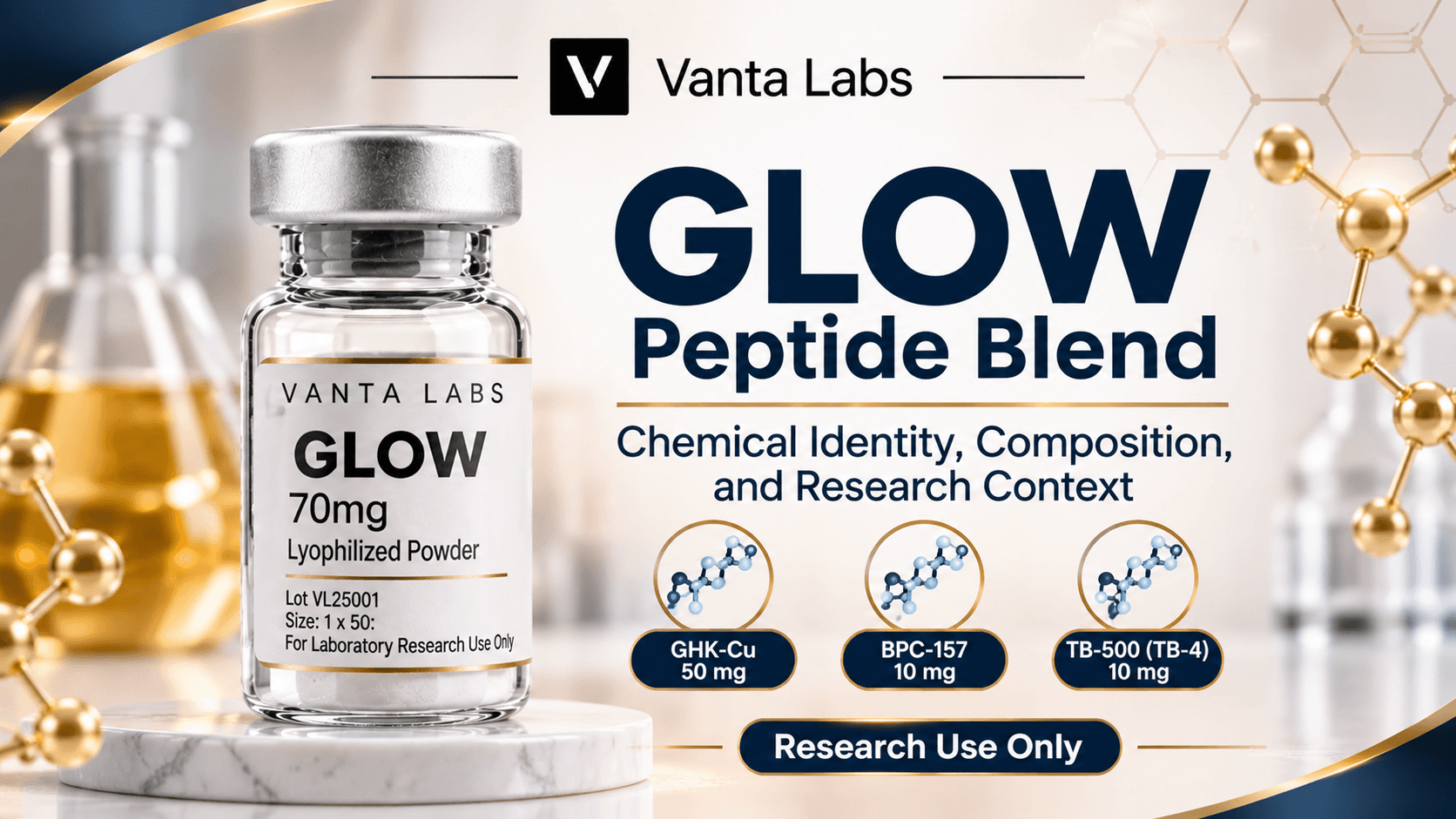
- Quality & testingGLOW Peptide Blend: Composition and Component ResearchA breakdown of what the Vanta Labs GLOW peptide blend actually contains, how its three labelled components are identified in the scientific literature, and what the batch certificate of analysis does and does not establish.Nov 14, 202610 min read
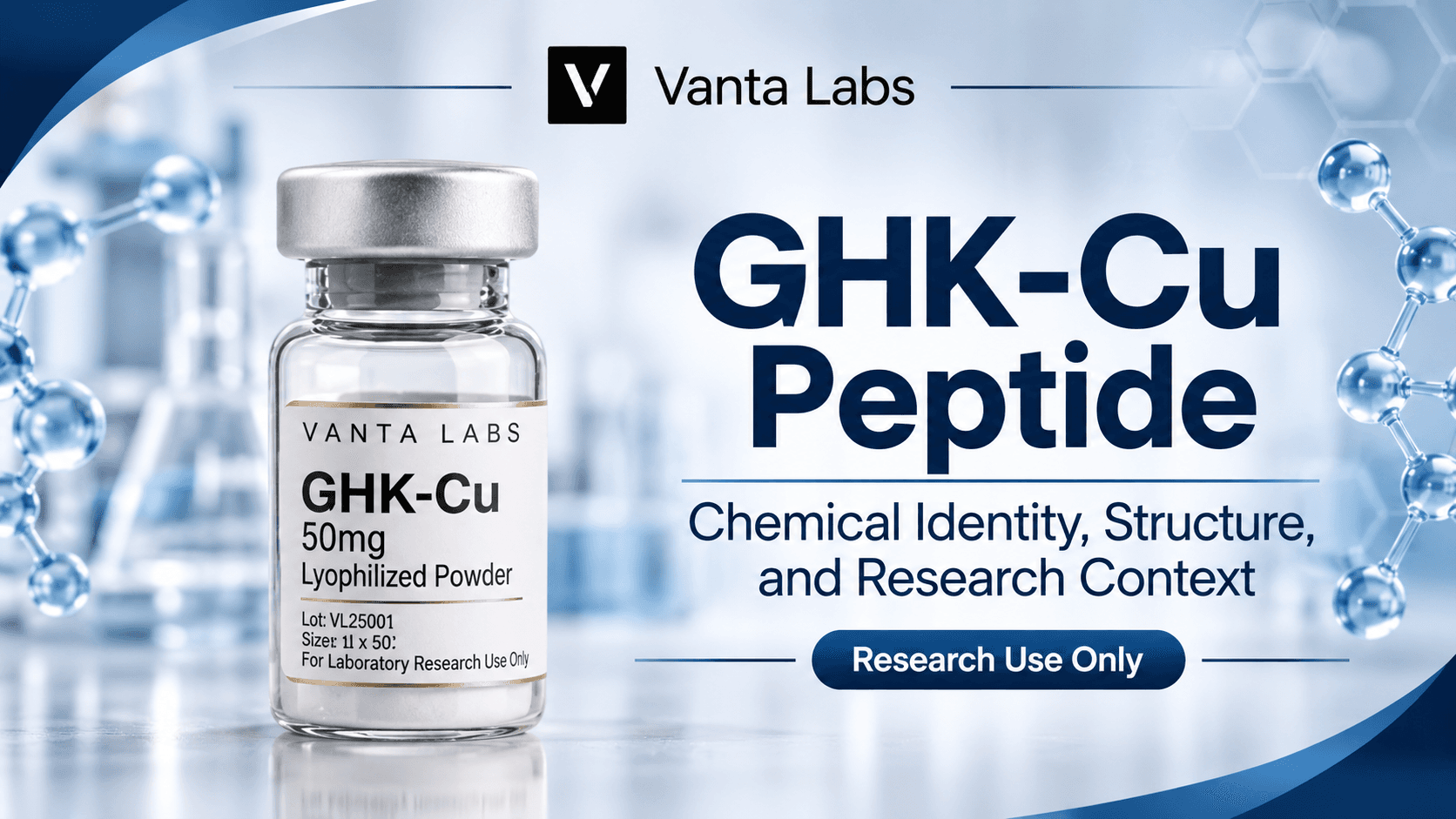
- Research basicsWhat Is GHK-Cu Peptide? Chemical Identity and TestingGHK-Cu peptide is the copper(II) complex of the tripeptide glycyl-L-histidyl-L-lysine — here's how its molecular identifiers and copper coordination chemistry let you read a specification sheet or COA accurately, without overstating what a purity or identity result actually shows.Nov 14, 202610 min read
- Analytical methodsUnderstanding HPLC ResultsHow high-performance liquid chromatography separates a sample, what a chromatogram shows, and how to read the peak table and purity figure on a report.Oct 14, 20265 min read
- Analytical methodsUnderstanding Mass SpectrometryWhat a mass spectrometer measures, how peptides appear in a spectrum, what monoisotopic and average mass mean, and what a mass match does and does not show.Oct 14, 20264 min read
- Research basicsUnderstanding Batch & Lot NumbersWhat batch and lot numbers are, how they tie a vial to its documentation, and how to match the number on a label to the report that describes it.Oct 14, 20264 min read
- Analytical methodsWhat Does Purity Percentage Mean?What the purity percentage on a report measures, why the method behind it matters, and why purity, content and identity are three different figures.Oct 14, 20264 min read
- Quality & testingWhy Batch-Level Testing MattersWhy a report describes one batch rather than a product, what a sample can and cannot say about its batch, and how to tell which batch a report covers.Oct 14, 20263 min read
- Quality & testingUnderstanding Independent Laboratory TestingWhat makes a laboratory independent, what accreditation does and does not mean, and how to check that a report came from the laboratory named on it.Oct 14, 20264 min read
- Research basicsWhat “Research Use Only” Actually MeansWhere the phrase comes from, what a label does and does not settle, and the terms used on this site's product pages and reports.Sep 25, 20263 min read
- Quality & testingHow to Read a Certificate of Analysis (COA)What each part of a COA tells you, using the reports we publish as the example, what they do not cover, and how to check one with the laboratory.Sep 25, 20264 min read
- Research basicsStoring & Handling Research MaterialsGood lab practice for keeping materials stable and traceable: storage, labeling, records, safety and disposal.Sep 25, 20261 min read